Atlanta Trash Pit Sinkholes: Signs, Causes & Repair
Most Atlanta homeowners have heard of sinkholes. Far fewer know about the hidden hazard causing yard collapses, foundation damage, and soft spots across Metro Atlanta every year. It's called a trash pit sinkhole — a man-made ground failure with roots in Atlanta's Civil War-era and mid-century development history. If your yard is showing signs of movement, buried debris may be the cause.
What Is a Trash Pit Sinkhole?
Before modern waste regulations, builders across Georgia buried construction debris, tree stumps, and organic waste directly in the ground. This practice was standard during Atlanta's rapid post-war suburban expansion across Fulton, DeKalb, and Cobb counties. Neighborhoods from Grant Park to Buckhead were built over land with buried fill that was never properly managed.
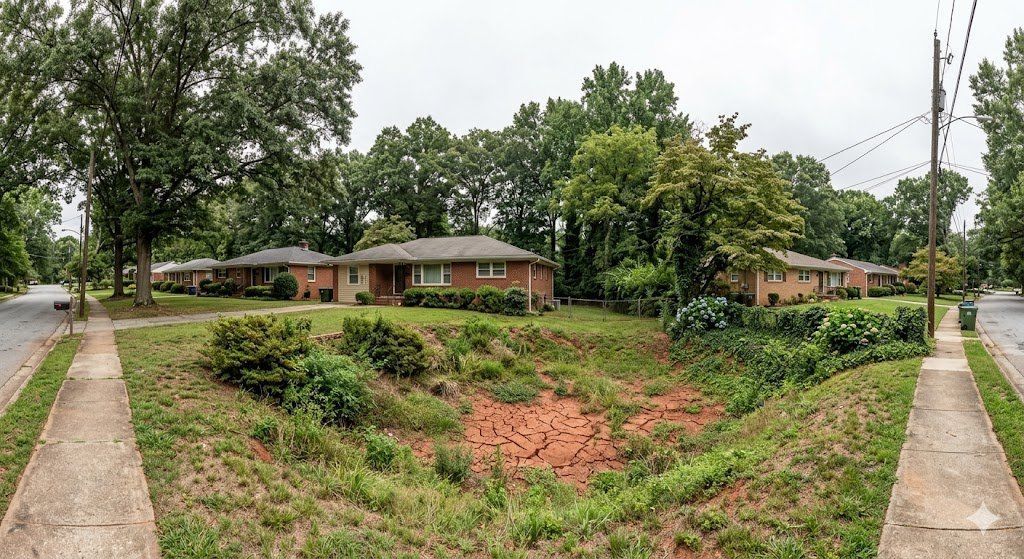
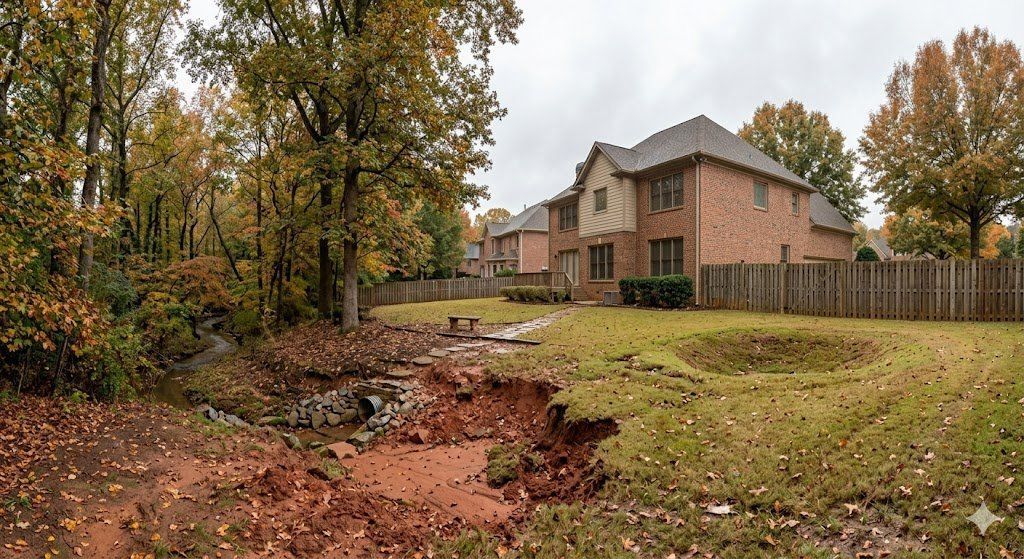
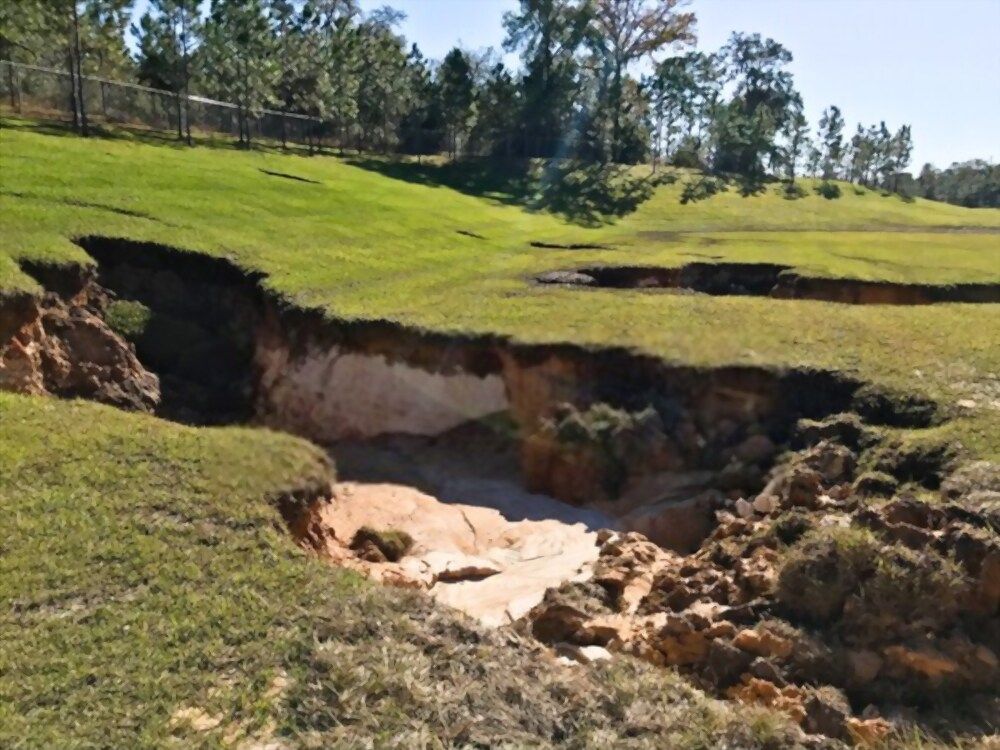
Over decades, that material decomposes. It loses volume and creates subsurface voids. The soil above collapses — sometimes gradually, sometimes suddenly. Unlike karst sinkholes common in Florida, trash pit sinkholes are man-made and found throughout Metro Atlanta regardless of geology.
The long-term risk is significant. Voids grow silently beneath the surface for years before any warning signs appear. By the time visible damage occurs, the void is often much larger than the surface suggests.
Why Atlanta Has So Many Trash Pit Sinkholes
Atlanta's development history creates ideal conditions for this problem. The city expanded rapidly outward through the 1950s, 60s, 70s, and 80s. Many subdivisions were built over former Civil War encampments, old dump sites, and previously cleared forest parcels — particularly across East Atlanta, Decatur, and older Cobb and DeKalb neighborhoods.
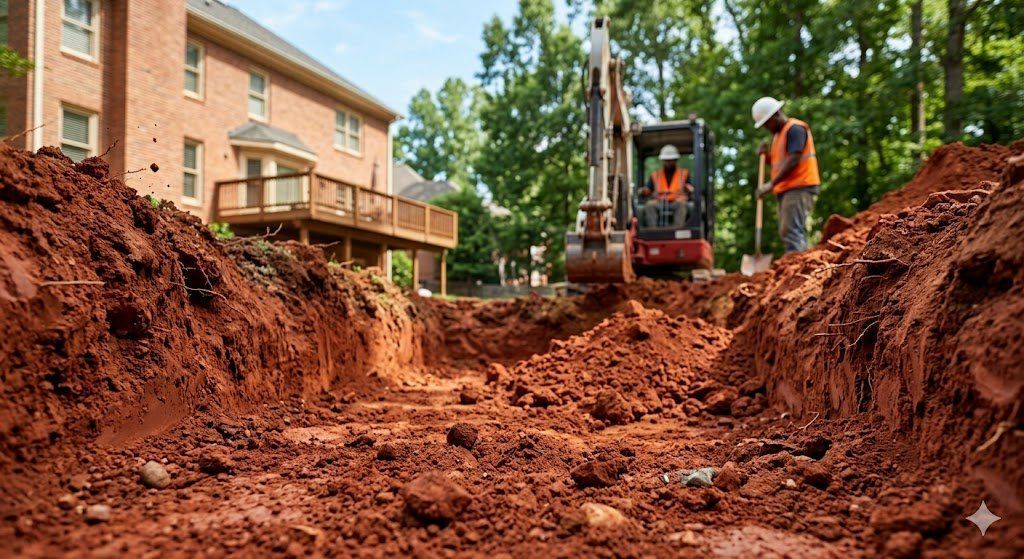
Atlanta's red clay soil accelerates the problem. Clay shrinks and swells with seasonal moisture changes. When clay sits above decomposing buried debris, that movement speeds up void formation. Water infiltrates the clay, accelerates decomposition below, and the void grows faster than it would in stable soil.
In addition, neighborhoods like Grant Park — one of Atlanta's oldest residential areas — sit on ground with a long history of development, demolition, and burial activity dating back to the 1800s. Properties in areas with this kind of history carry elevated long-term risk.
Warning Signs on Your Property
Trash pit sinkholes give early warning signs before a collapse. Watch for these on your property:
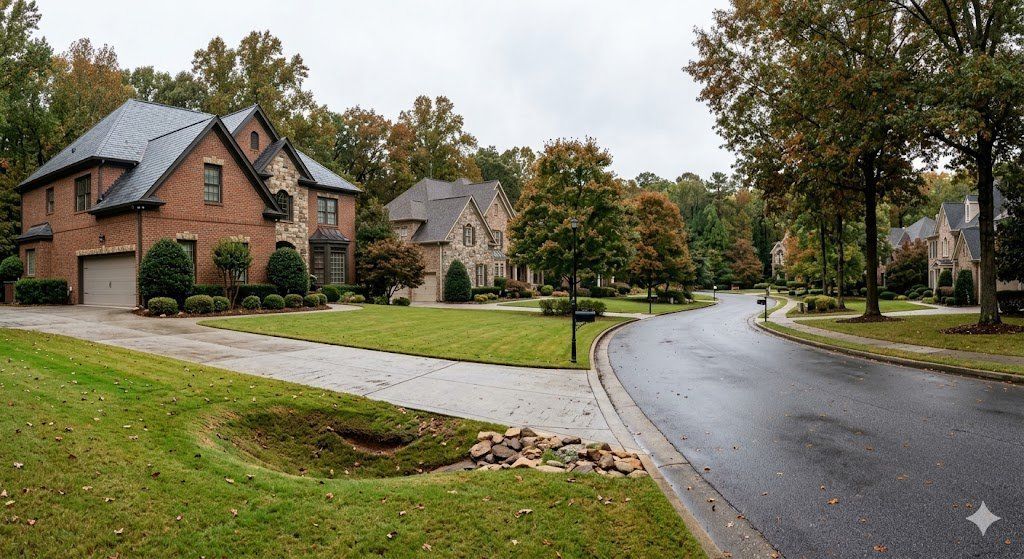
- Bowl-shaped yard depression that worsens after heavy rain
- Soft or spongy ground in areas that were previously firm
- Standing water pooling in a new location after rain
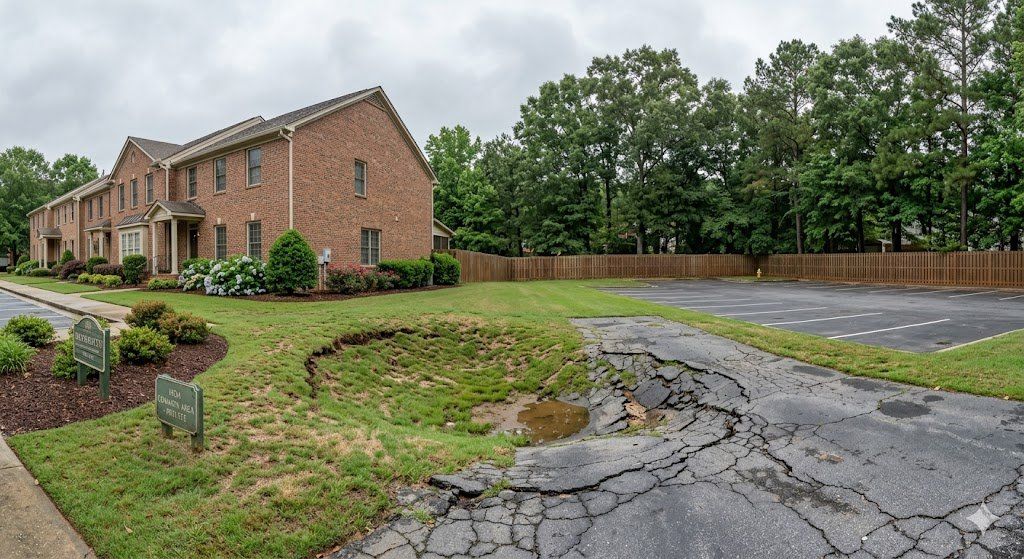
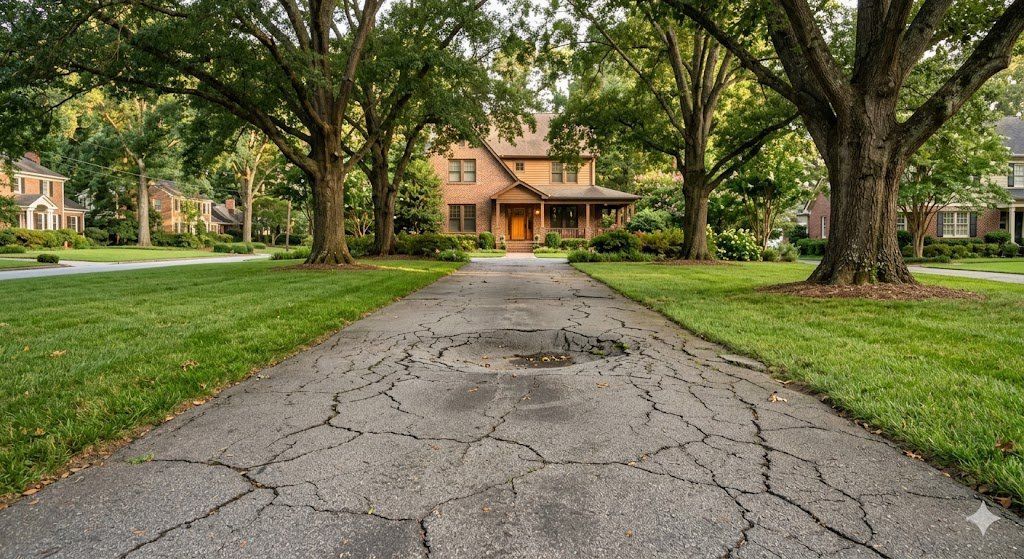
- Driveway, patio, or walkway cracks that widen over time
- Doors or windows that suddenly stick or won't close
- Uneven or sloping floors inside your home
- Ground softening near a recently removed tree stump
Stump removal deserves special attention in Atlanta. It can accelerate decomposition of deeper buried material and worsen an existing void. If you've had a tree removed and notice ground changes in the following months, schedule a professional sinkhole inspection and detection promptly.
How Trash Pit Sinkholes Are Repaired
Surface filling does not fix a trash pit sinkhole. Pouring topsoil or concrete over a depression masks the void while it continues to grow below. This is the most common and costly mistake property owners make.
Proper repair starts with identifying the full extent and depth of the void. For shallow voids, excavation and compacted backfill in lifts restores load-bearing capacity from the bottom up. Our soil stabilization services are built for this type of repair.
For deeper voids beneath foundations, driveways, or other structures, compaction grouting is the preferred method. Injection points are drilled around the affected area and cement-based or polyurethane grout is injected under pressure. The grout fills the void and densifies the surrounding soil without full excavation — producing a stable, long-term result.
When foundation damage has occurred alongside the soil failure, our team handles both. We provide foundation repair and underpinning and driveway and patio repair under one scope — full accountability from start to finish.
What to Do Next
If you see warning signs, take these steps immediately:
- Do not attempt a surface patch — it will fail
- Keep people, pets, and vehicles away from soft or depressed areas
- Contact a licensed sinkhole inspection professional
- Do not pour new concrete over an undiagnosed problem
If you are buying or selling a home in an older Atlanta neighborhood, a pre-purchase sinkhole inspection is essential due diligence. Discovering a trash pit void after closing costs far more than identifying it beforehand. We serve all of Metro Atlanta including Sandy Springs, Roswell, Marietta, Cumming, Decatur, and the greater Atlanta area.
Call Sinkhole Repair ATL at 844-308-1192 or request a free inspection online. Available 24/7 for emergency response throughout Metro Atlanta.
Frequently Asked Questions
What is a trash pit sinkhole in Atlanta?
A trash pit sinkhole forms when buried construction debris, tree stumps, and organic material — left underground during Atlanta's mid-century development — decomposes and creates subsurface voids. These are man-made ground failures found throughout Metro Atlanta, from Grant Park to the northern suburbs.
What are the warning signs of a trash pit sinkhole?
A bowl-shaped yard depression that worsens after rain, soft ground, unexplained cracks in driveways or patios, and doors or windows that stick are the most common signs. Ground softening near a recently removed tree stump is also a strong local indicator.
Can I fill a trash pit sinkhole myself?
No. Surface filling masks the void while it continues to grow. Long-term repair requires identifying the full void and rebuilding load-bearing capacity from the bottom up. Call 844-308-1192 for a free inspection.
How much does trash pit sinkhole repair cost in Atlanta?
Minor repairs typically start around $4,000. Larger voids near foundations can exceed $15,000. Sinkhole Repair ATL provides free inspections and written estimates with no obligation.
Sinkhole Repair ATL
Serving Atlanta, GA and all of Metro Atlanta
📞 844-308-1192
🌐 www.sinkholerepairatl.com
Free Inspections | 24/7 Emergency Service | Licensed & Insured