Commercial Sinkhole Repair in Atlanta, GA: What Business Owners and Property Managers Need to Know
A sinkhole on your commercial property in Atlanta is not just a structural problem. It is a business liability, an insurance claim waiting to happen, and a potential lawsuit if a customer, tenant, or employee gets hurt. And unlike a residential sinkhole that affects one family, a commercial sinkhole can disrupt operations, force temporary closures, and cost significantly more to remediate at scale.
If you manage or own a commercial property in Atlanta or the surrounding metro area — whether it's a retail strip, an office complex, a warehouse, a restaurant pad, or a parking facility — this guide is written specifically for you. We cover warning signs, repair methods, cost ranges, liability exposure, insurance documentation, and exactly what to expect when you call Sinkhole Repair ATL.
Why Atlanta Commercial Properties Are at Elevated Risk
Atlanta sits on a complex mix of granite, clay, and weathered rock that creates unpredictable underground conditions. Decades of rapid commercial development, aging stormwater infrastructure, and Georgia's wet season create the ideal recipe for subsurface erosion and void formation beneath commercial properties.
The most common drivers of commercial sinkholes in the Atlanta metro area include:
- Failing or broken stormwater and sewer lines — Underground pipe failures quietly wash soil away over years, creating voids directly beneath driveways, loading docks, and building foundations before any surface sign appears.
- Heavy surface loading — Delivery trucks, forklifts, and high-traffic parking can accelerate the collapse of a void that might have gone unnoticed on a lighter-use residential property.
- Impervious surface runoff — Large parking lots and rooftops concentrate water discharge at specific points, eroding soil in predictable patterns underneath asphalt and concrete.
- Aging construction fill material — Many commercial developments in the Atlanta suburbs were built over poorly compacted fill from the 1970s through 1990s. That fill is now settling.
- Underground karst activity — Portions of metro Atlanta sit on or near karst terrain, where limestone dissolution creates natural voids that migrate upward over time.
Understanding what causes a sinkhole to form is the first step in protecting your property. Our full guide on why sinkholes form goes deeper on the underlying mechanics, and our post on where sinkholes most commonly form in Atlanta identifies the highest-risk zones across the metro area.
Warning Signs of Sinkholes on Commercial Properties
Commercial sinkholes rarely appear out of nowhere. In most cases, the ground gives you weeks or months of warning signals before a collapse. The challenge is knowing what to look for — especially across a large property where subtle changes can go unnoticed.
Parking Lots and Paved Surfaces
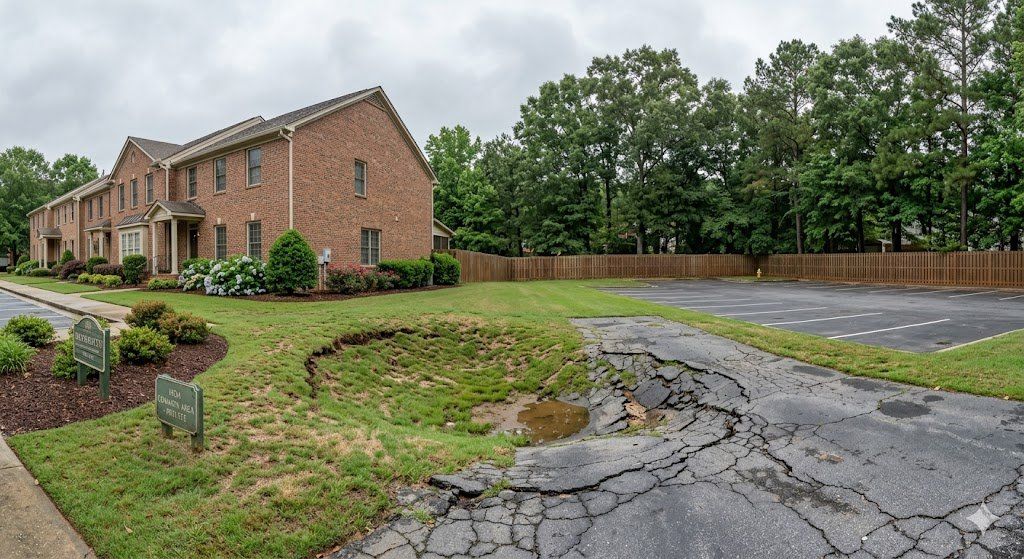
- New cracks in asphalt or concrete that weren't there before, especially radial or spider-web patterns
- Depressions or low spots forming in previously flat pavement
- Asphalt that feels "spongy" or flexes under vehicle weight
- Catch basins or storm drains that are suddenly draining slowly or sinking
- Water pooling in areas that drain normally after rain
- Voids or hollow sounds when pavement is struck
Building Structure and Foundation
- New diagonal cracks appearing in exterior masonry or interior drywall, particularly above door and window frames
- Doors and windows that stick, jam, or no longer close properly
- Gaps forming between floors and walls, or between walls and ceilings
- Floors that visibly slope or feel uneven underfoot
- Visible separation in slab sections on warehouse or retail floors
- Pipes that develop unexplained leaks inside the building
Landscaping, Grounds, and Perimeter
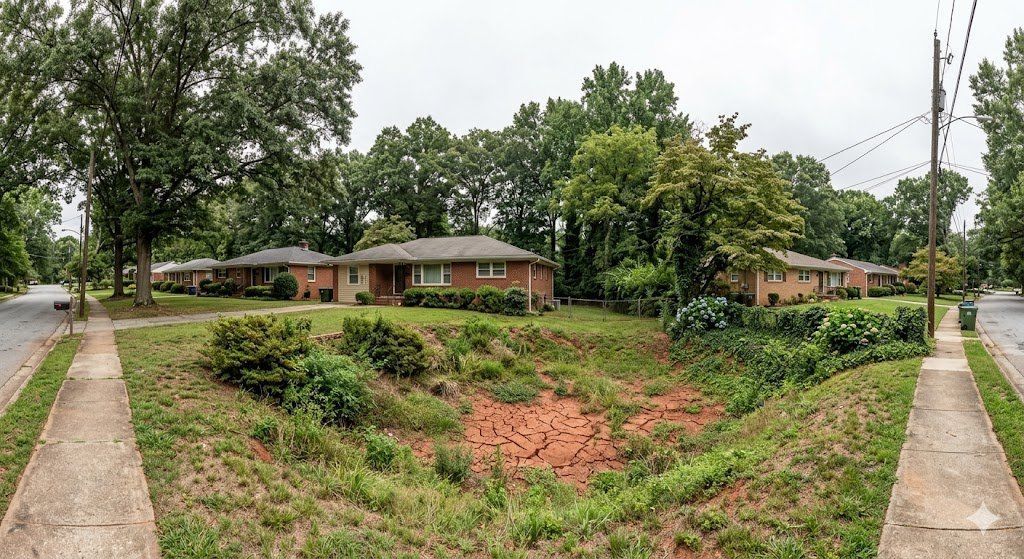
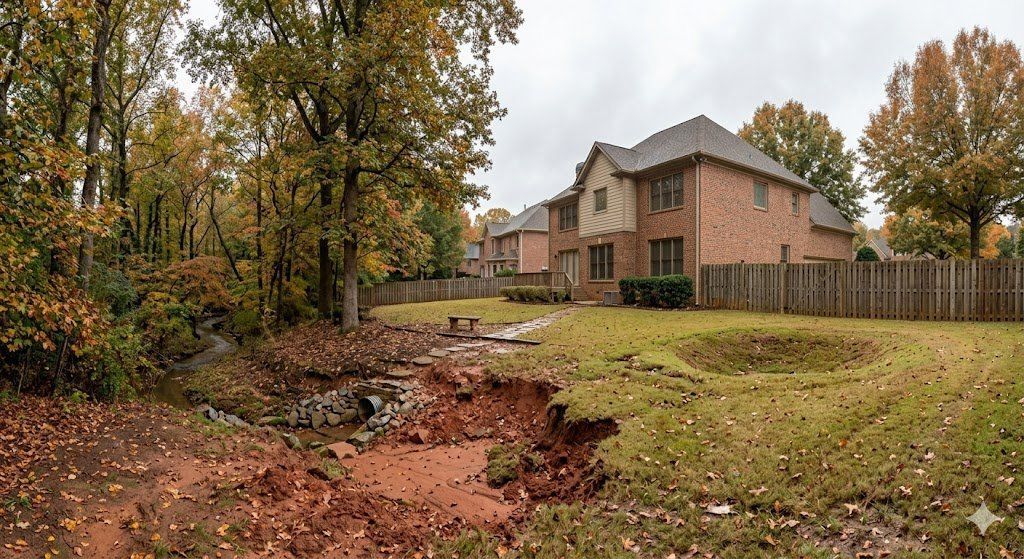
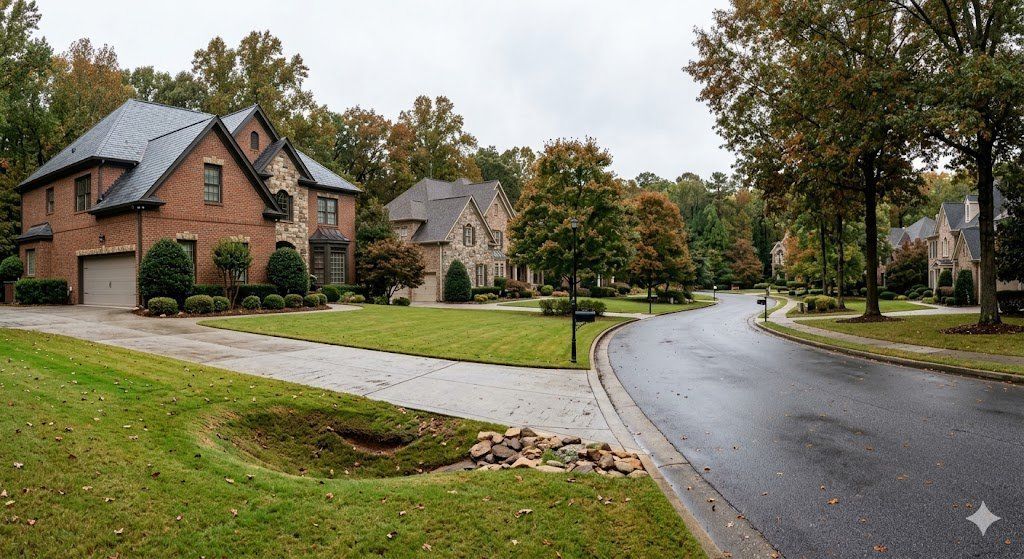
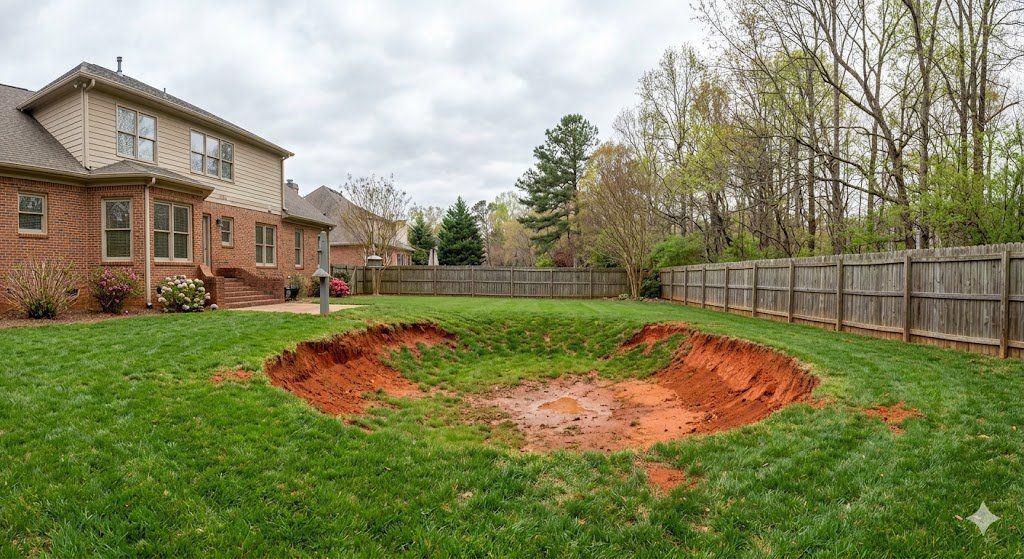
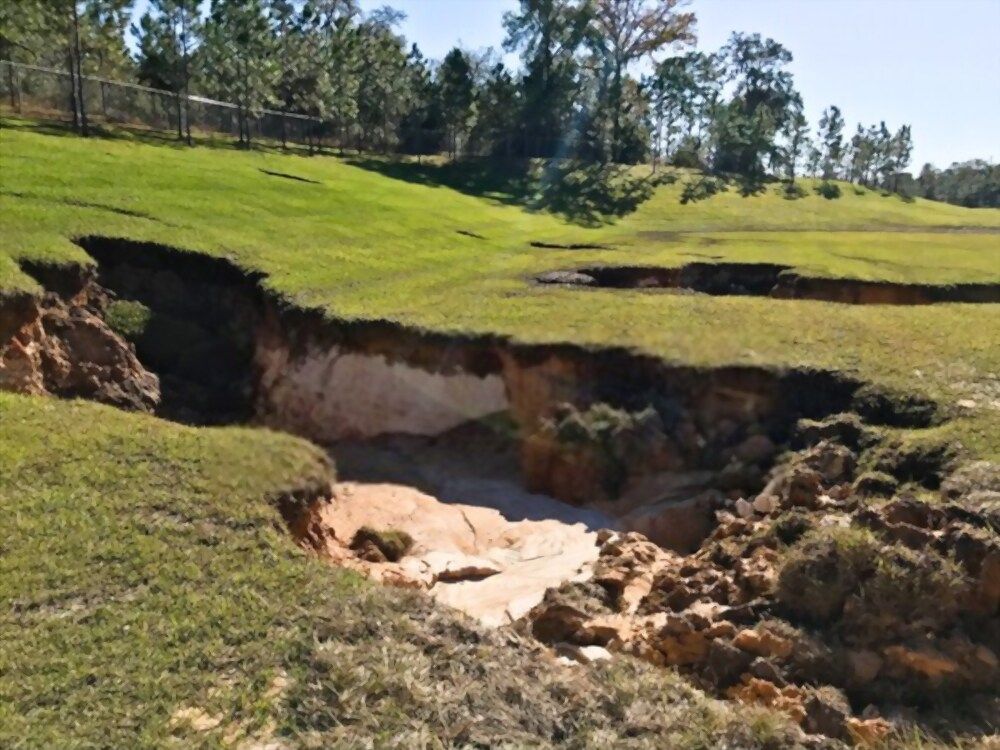
- Circular or oval depressions forming in grass or landscaped areas near the building
- Trees, light poles, or fencing posts that start to tilt without explanation
- Exposed tree roots or soil that has visibly subsided around a tree base
- Muddy water appearing in a yard or ground-level drain without a rainfall event
- Sinkholes or depressions near the property perimeter, which can indicate a migrating void moving toward the building
If you notice any of these signs, do not wait. Rope off the affected area immediately and call for a professional assessment. Read our full breakdown of how to tell if a sinkhole is forming on your property and our post covering critical sinkhole warning signs for property owners in the Atlanta metro.
Types of Commercial Properties We Repair
Sinkhole Repair ATL provides commercial remediation services for a wide range of property types throughout the Atlanta metropolitan area, including:
- Retail strip centers and shopping centers — Sinkhole activity beneath parking lots and storefronts creates immediate liability exposure and can disrupt anchor tenant operations.
- Restaurants and fast food pads — Drive-through lanes and high-traffic parking areas are particularly vulnerable to pavement voiding from stormwater erosion.
- Office complexes and business parks — Foundation integrity is critical when occupied floors are above the affected area.
- Warehouses and distribution centers — Floor slab failures in warehouse environments can damage inventory, create OSHA safety hazards, and halt operations entirely.
- Apartment complexes and HOAs — Parking lots, driveways, and common areas in multi-family communities require fast response to protect residents and limit liability.
- Municipal and government facilities — We work on public property repairs that require documentation, permitting coordination, and compliance with local codes.
- Gas stations and automotive properties — Underground storage tank areas and fuel islands present specialized remediation needs that require experienced assessment.
Commercial Sinkhole Repair Methods Explained
The right repair method depends on the size of the void, its depth, its proximity to structures, and what's above it. Commercial repairs often involve a combination of techniques rather than a single solution. Here are the primary methods we use:
Compaction Grouting
Compaction grouting is the most widely used method for commercial sinkhole remediation in the Atlanta area. It involves drilling small-diameter bore holes into the affected area and injecting a stiff, low-slump grout mixture under controlled pressure. The grout displaces loose or void-ridden soil, compresses it outward, and fills underground cavities — all without major excavation.
This method is particularly well-suited to commercial properties because it causes minimal surface disruption, can be performed while portions of the property remain operational, and works well under asphalt, concrete slabs, and building foundations.
Underpinning with Steel Piers
When a commercial building's foundation has been compromised by sinkhole activity, underpinning is often required. Steel piers are driven or hydraulically pushed through the unstable soil and into competent bedrock or load-bearing strata below the void zone. The building's foundation is then transferred to those piers, stabilizing the structure and preventing further settlement.
This method is common in situations where a sinkhole has caused measurable foundation movement — cracked masonry, uneven floors, sticking doors — and the structure needs both stabilization and potential lifting to restore level.
Excavation and Engineered Fill
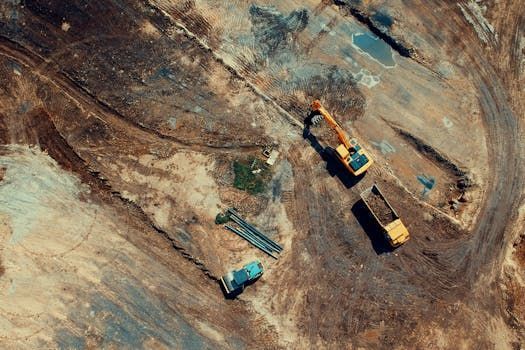
For sinkholes that are shallow, accessible, and not directly beneath a structure, open excavation is sometimes the most effective approach. The void is exposed, inspected, and filled with compacted engineered fill material in controlled lifts. A geotextile filter fabric is typically placed at the base of the fill to prevent future soil migration into any remaining rock fractures below.
This method is common for parking lot depressions, yard sinkholes, and utility trench failures where access is not restricted by a building overhead.
For more detail on the differences between these approaches and how they apply to your specific situation, see our guide on why professional assessment matters before any sinkhole repair.
Business Liability: Why Waiting Is Not an Option
The moment you are aware of a potential sinkhole on your commercial property, your liability exposure begins. Georgia property law makes it clear: if you know — or reasonably should have known — about a hazard on your property and failed to address it, you can be held liable for injuries or damages that result.
For commercial property owners and managers, this is not a hypothetical risk. A customer who trips and falls at a parking lot depression, a delivery driver whose truck drops into a void, or an employee who is injured by a suddenly collapsing warehouse floor — these are real scenarios with real legal consequences.
Beyond personal injury claims, Georgia disclosure law requires that known sinkhole damage be disclosed in property transactions. Failing to disclose and subsequently selling or leasing a property with a known subsurface condition can expose owners to fraud and misrepresentation claims.
Best practice: rope off any suspected sinkhole area immediately, document it with photographs and video, and call for a professional assessment the same day. Do not wait for the condition to worsen. Do not attempt to fill it with dirt, gravel, or landscaping material as a temporary fix — this masks the void without addressing it and can accelerate a future collapse.
How Long Does Commercial Sinkhole Repair Take?
Timeline is one of the first questions commercial clients ask — because downtime has a direct dollar cost for any operating business. The honest answer is that it depends heavily on the scope of the problem.
- Parking lot or pavement repair (compaction grouting): 1 to 3 days in most cases. Bore holes are drilled, grouting is injected, holes are patched, and the area can typically be returned to vehicle traffic within 24 to 48 hours of grouting completion.
- Building foundation stabilization (underpinning): 3 to 7 days depending on the number of piers required and access constraints. Work is typically staged so that portions of the building can remain in use during the process.
- Large-scale excavation and fill: 5 to 14 days depending on the depth and volume of material involved. Utility relocation, permitting, and site restoration add time in complex cases.
Emergency response — when a sinkhole presents an immediate safety threat — can begin within hours of your call. Our detailed timeline post on how long sinkhole repair takes in Atlanta covers the full range of scenarios including emergency response windows. For immediate threats, our 24/7 emergency sinkhole repair service is available around the clock.
What Does Commercial Sinkhole Repair Cost in Atlanta?
Commercial sinkhole repair costs more than residential repair — the scope is larger, the stakes are higher, and the remediation methods are often more intensive. Here are general cost ranges for commercial projects in the Atlanta market:
- Parking lot void filling / compaction grouting (small area): $3,500 – $12,000
- Compaction grouting for large commercial slab or parking field: $12,000 – $50,000+
- Foundation underpinning (per pier): $800 – $2,500, with full projects typically requiring 8 to 20+ piers
- Full excavation, engineered fill, and asphalt restoration: $15,000 – $75,000+ depending on depth and scope
- Emergency response mobilization surcharge: Typically adds 15–25% to base repair costs
These ranges are estimates. Actual costs depend on site-specific geology, access constraints, the depth and lateral extent of the void, and whether any utility relocation is required. A proper assessment — which we provide free of charge — is the only way to generate an accurate project number.
For context on residential and smaller-scale commercial pricing, see our detailed breakdown of sinkhole repair costs in Atlanta for 2025.
Insurance Documentation: What Your Business Needs
Commercial property insurance policies vary widely in how they address sinkhole damage. In Georgia, sinkhole coverage is not automatically included in standard commercial property policies the way it is in some other states like Florida. That means many commercial property owners are underinsured for sinkhole events without knowing it.
Regardless of your specific policy, proper documentation before, during, and after repair is essential to maximizing your claim. Here is what to gather and preserve:
- Photographs and video of the sinkhole and all surrounding damage, taken as soon as the condition is discovered
- Date and time of discovery — document when you first observed the issue
- Written incident report if the sinkhole was discovered by an employee, tenant, or visitor
- Geotechnical assessment report from a licensed professional documenting the extent and probable cause of the void
- Repair scope of work and itemized estimate from a qualified contractor (we provide this)
- All correspondence with your insurance carrier from the date of first notice forward
For a full breakdown of how commercial insurance policies apply to sinkhole events and how to navigate the claims process in Georgia, read our dedicated guide: does commercial insurance cover sinkholes in Marietta and metro Atlanta?
Our Commercial Repair Process
When you call Sinkhole Repair ATL for a commercial project, here is exactly what happens:
- Same-day or next-day assessment. We dispatch a technician to your property to evaluate the affected area, assess the scope of the void, and identify any immediate safety hazards. We can provide barrier tape and signage recommendations on-site to protect your liability position.
- Geotechnical review and repair plan. Based on the assessment, we develop a scope of work that identifies the repair method, equipment requirements, timeline, and pricing. For larger projects, we coordinate with a licensed geotechnical engineer as needed.
- Permitting and coordination. We handle any required permits and notify relevant utility companies if underground work is required near buried lines. We coordinate with your property manager or building owner throughout.
- Repair execution with minimal disruption. Our crews are trained to work efficiently while keeping as much of your property operational as possible. We stage work areas, maintain clear pedestrian and vehicle routes, and communicate daily on progress.
- Documentation and closeout package. When work is complete, we provide a full closeout package including before and after photos, the scope of work performed, material specifications, and any warranty documentation — everything your insurance carrier and legal team may need.
Frequently Asked Questions: Commercial Sinkhole Repair in Atlanta
Can I keep my business open during sinkhole repair?
In most cases, yes — partially. Compaction grouting and pier installation work is typically confined to specific zones, and the rest of your property can remain accessible. We work with you to stage the repair sequence around your operations. However, if the sinkhole is directly beneath an occupied structure or presents an active collapse risk, temporary closure of that area may be required for safety.
Who is responsible if a tenant's property is damaged by a sinkhole?
This is typically a landlord responsibility in Georgia when the damage results from a subsurface condition in the ground or building foundation — not the tenant's activity. Review your lease agreements and consult legal counsel, but in most commercial lease structures, subsurface structural repairs are the property owner's obligation. That is all the more reason to address sinkhole conditions proactively rather than waiting for a tenant to be harmed.
Will my insurance cover the full cost of commercial sinkhole repair?
It depends entirely on your policy. Georgia does not mandate sinkhole coverage for commercial properties, so many standard commercial property policies exclude it unless an endorsement was specifically added. Your policy may cover "earth movement" or "collapse" under different terms with different deductibles. Pull your policy documents and review with your broker before assuming coverage — ideally before a sinkhole event, not after. Our full insurance guide covers this in detail: commercial sinkhole insurance in Georgia.
How do I know if a pipe failure is causing the sinkhole on my commercial property?
A good indicator is whether the sinkhole is located near a stormwater drain, a utility corridor, or a known pipe route. We can assess this during our site visit. In many commercial cases, a camera inspection of nearby stormwater and sewer lines is recommended as part of the diagnostic process to identify and address the source — not just the symptom. See our post on why sinkholes form for more on pipe-related causes.
Is a sinkhole in my parking lot a different repair than one under my building?
Yes, typically. A parking lot void is usually addressed with compaction grouting or excavation and fill, and the restoration involves asphalt or concrete patching. A void under a building foundation may require underpinning to transfer structural loads and stabilize the building itself, in addition to filling the void. The proximity to occupied structures also changes the safety protocols and equipment approach. Our team assesses each situation individually and recommends the right method for the specific location. For a broader look at which professionals handle different types of sinkhole repairs, see who to call for sinkhole repair in Atlanta.
Call Sinkhole Repair ATL for Your Commercial Property
Commercial sinkhole repair demands a contractor with the right equipment, the right expertise, and the right process documentation to protect your investment and your liability position. Sinkhole Repair ATL serves business owners and property managers throughout Atlanta, Marietta, Cumming, and the entire metro area with fast response, professional remediation, and complete project documentation.
Do not wait for a small problem to become a large one. If you have seen warning signs on your commercial property — or if you just want a baseline assessment — call us today at (844) 308-1192 or reach out through our website to schedule your commercial property assessment. We offer same-day response for active sinkhole concerns.